Agent Work Is Theatre When Bash Would Do
An agent announcing it will 'set up your knowledge system' and then running the same commands a script would have run. That feels like progress. Often it is theatre.
I once used an AI agent to make folders and copy files.
The task was setting up a clean Obsidian vault. Create the folders. Copy the templates. Write a daily-note stub. An agent could do all of it, so I let it.
It worked. It also took longer, cost more, and carried a risk a shell script never would: it could misread a path, invent a step, skip a file, and still report back that everything was done.
We keep reaching for intelligence where the job only needs plumbing.
Two kinds of work
Some work needs judgment. Which product to build first. What a customer actually needs. Which thirty seconds of a transcript is the clip. Whether a feature is worth the cost. These are reading, comparison, taste. They have many good answers and no obvious one. That is what an agent is for.
The rest does not need judgment at all. Make this folder. Copy these files. Count the notes missing a link. Rename this batch to one pattern. These are not thinking tasks. They are shell tasks, and they have exactly one correct outcome.
The test I use now is one line. If the task has one correct answer, use a deterministic tool. If it has many good answers, use an agent. File moves, counts, format checks: script. Summaries, themes, tradeoffs: agent.
The theatre problem
AI makes simple work look impressive, and that is the trap.
The agent says, “I will now set up your knowledge system.” Then it runs the same mkdir and cp a script would have run, narrating each one like a discovery. The terminal fills with confident prose. It feels like something important is happening.
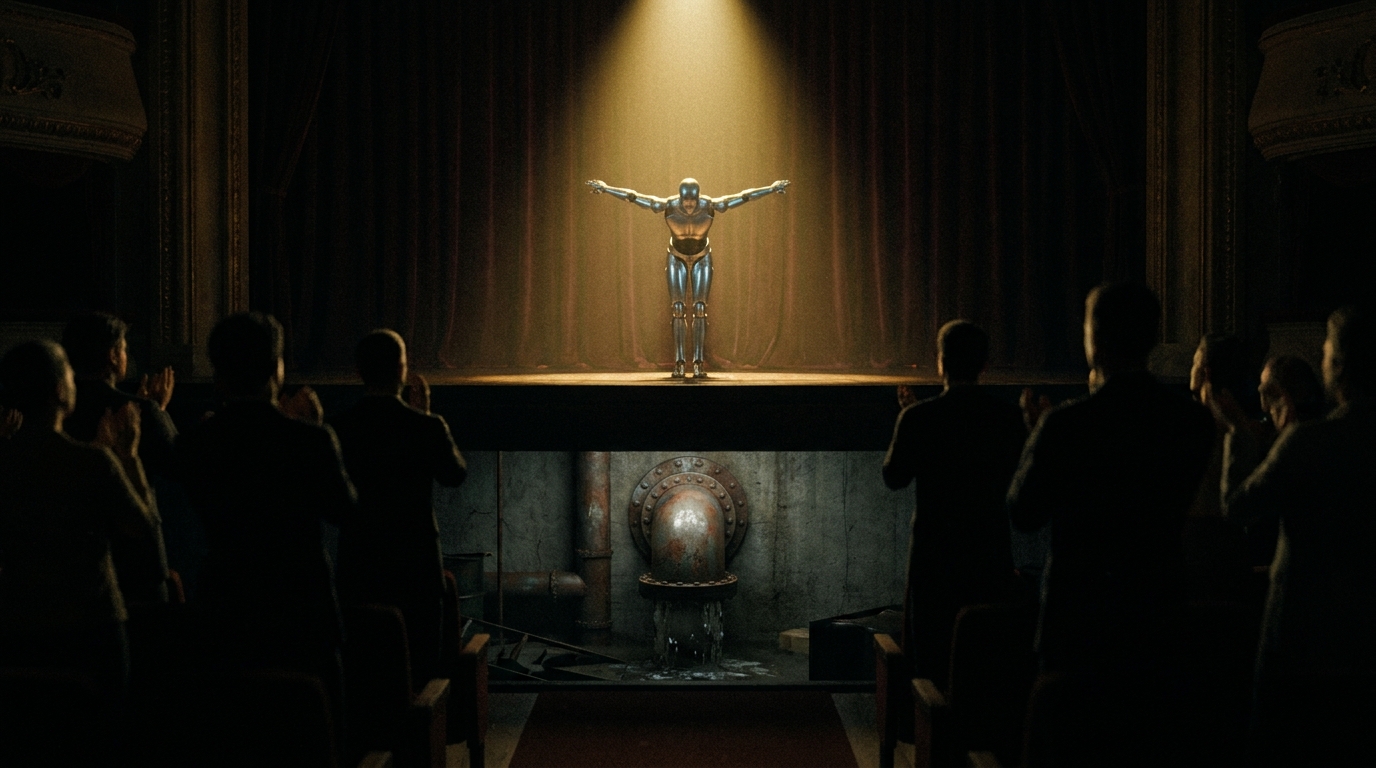
It isn’t. A reasoning model wrapped around a file copy is a stagehand in a tuxedo. Bash does not try to sound smart. It just does the job and stops talking.
The question is never “can the agent do it?” The agent can do almost anything badly. The question is “does this task need judgment?” If the answer is no, the performance is cost you are paying for nothing.
What the theatre actually costs
It costs more than tokens. It costs trust.
Use an agent for everything and you start believing its reports the way you believe a receipt. You see “done” and you move on. But “done” from an agent is a claim, not a fact. In that same vault project, an agent told me it had processed every note. It had skipped eighteen. The fix was not a smarter agent. The fix was ls | wc -l.
That is the whole discipline in one image. Trust the agent for judgment. Trust the machine for counting. The moment you let the agent both do the deterministic work and certify it, you have removed the one cheap check that would have caught it.
This is the same lesson I keep relearning from a different angle every month. An instruction is not a control. A green test suite is not a running system. An agent that finished early will invent more work. None of those are failures of capability. They are failures of fit: the wrong tool, trusted in the wrong place, sounding sure the whole time.
Where agents earn it
The vault project did have real agent work in it. It came after the plumbing.
Once the files existed, the actual question started. How should these notes connect? Which ideas recur across different creators? One map per creator, or theme maps that cut across all of them? There is no mkdir for that. It needs reading, grouping, comparing, deciding. That is judgment, and that is exactly where the agent stopped being theatre and started being useful.
The practical takeaway
Before you hand work to an agent, ask three things. Does this need judgment? Would a script do it faster and safer? How will I verify the result?
If you cannot answer the third one, do not start.
The goal was never to use AI more. The goal is to build systems where the smart tool does the smart work and the dumb tool does the dumb work, and you can tell which is which at a glance.
Related: An Instruction Is Not a Control · Verify the Running System, Not Your Memory of It