IDE-Driven Strategy: Using Coding Agents for Business Ops
I gave a coding agent a repository with zero code in it. Just my business. It read the whole thing and started fixing it.
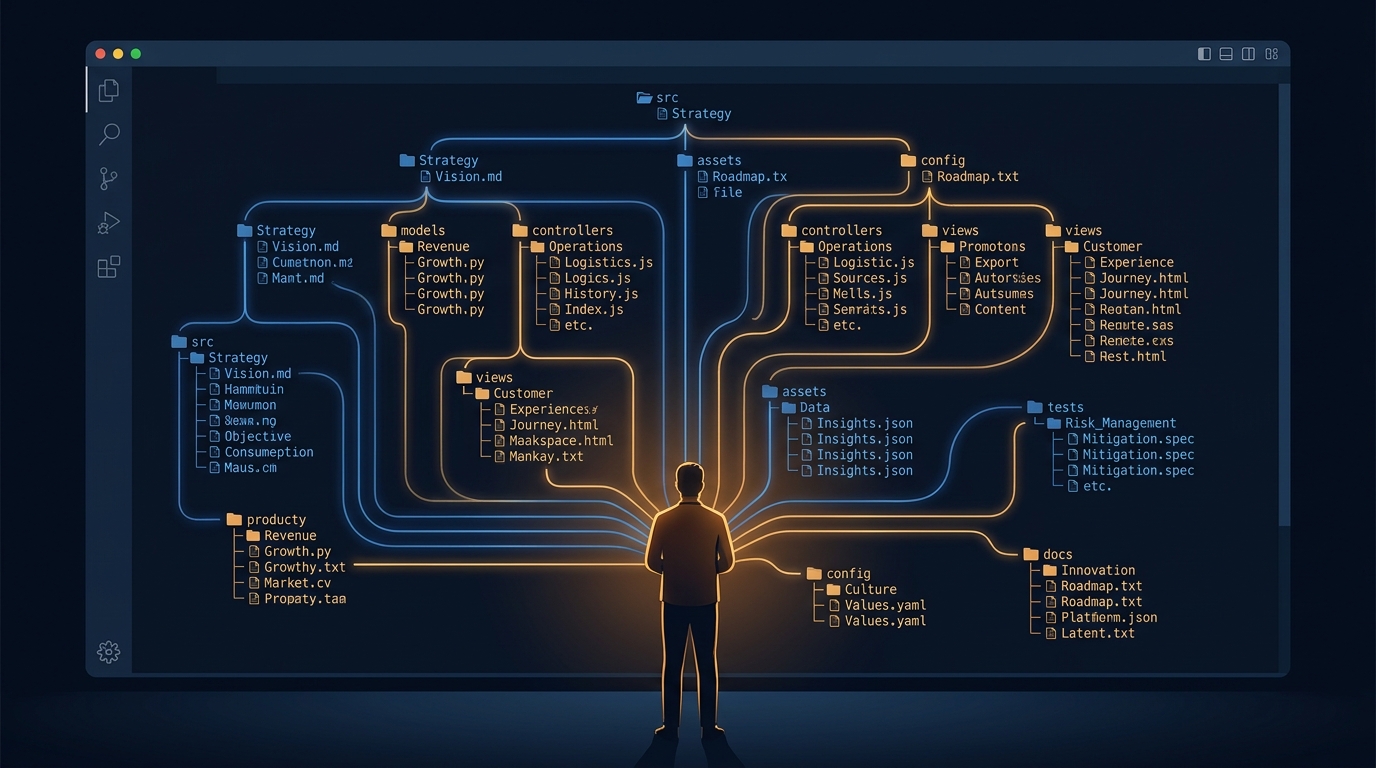
I started using a tool called Antigravity.
It is built by Google DeepMind, and it is a coding agent: it lives in my terminal, reads my entire file system, and writes software from what it finds there.
Forty-eight hours in, I realized something.
I was not using it for code.
I was using it to run my business.
The assistant that forgets you
Most AI tools have amnesia.
ChatGPT, OpenAI’s chat assistant. Claude in a browser tab, Anthropic’s. Both are sharp, and both forget you the second you close the window. Every conversation, you paste your context back in. Who you are. What you sell. What broke last week. You re-brief a stranger every single morning.
A coding agent does not work that way.
It is built to read a repository: the full folder of a software project, every file, all at once. It does not need you to explain the project. It already read the project.
So I built a repository with no code in it.
Where a normal project has a src/components folder, mine had src/strategy. Where a project has an index.js, mine had a manifesto.md. The shape of a codebase, filled with my business.
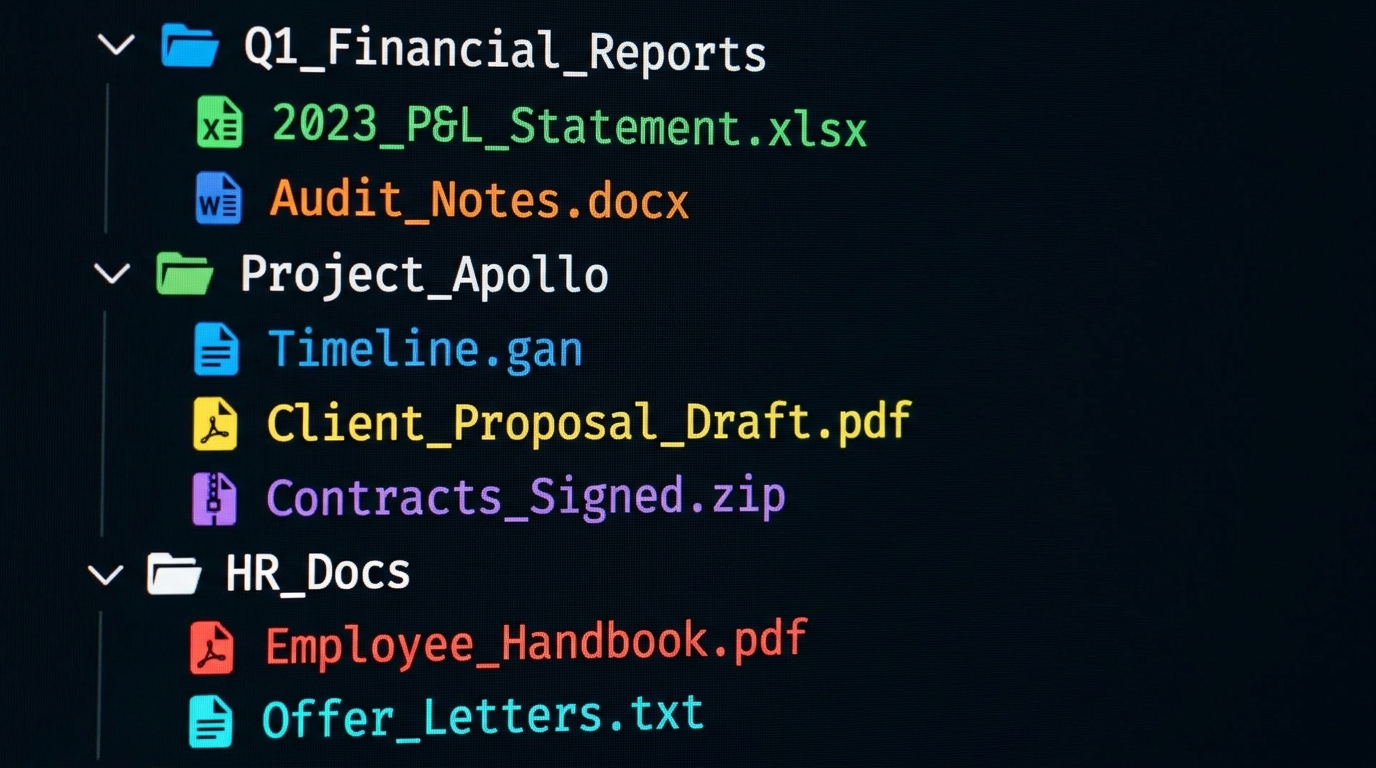
Treat your business like a codebase, and the machine can finally read it.
Documentation starts acting like code
Once your business lives in files, the tools built for code start working on it.
Version control: the system that tracks every change to a project over time. Now I can scroll back and watch how my strategy actually evolved, decision by decision, instead of trusting my memory of it.
Modularity: breaking one big thing into small reusable parts. A messy 40-page plan becomes a folder of short, clear files you can move, swap, and reuse.
Linting: the pass that flags broken logic in code before it ships. Now I point it at my own thinking.
Here is the one that sold me.
I asked Antigravity to read my client-onboarding.md and find the friction points, using my churn-logs.md as evidence.
No clever prompt. No setup.
It read both files and handed me the answer.
Ops and engineering are merging toolchains
We are heading somewhere specific.
The work of running a business and the work of building software are starting to use the same tools.
Strategy you edit like source code.
A business you manage in plain Markdown files.
Thinking you do in the terminal.
The tools are already here. We just have to use them “wrong” to get it right.
Related Labs:
- Documentation is Executable Infrastructure — What happens when the machine builds from your files, not just reads them.